A blog is a type of website where a person or a group regularly publishes posts or articles to share information, ideas, experiences, or knowledge on different topics. In simple term a blog works by publishing articles or posts on a website about different topics. The blogger writes and uploads the content, and it becomes available for people to read online. Visitors can find these posts through search engines or by visiting the website directly. As new posts are added regularly, the blog keeps growing with fresh information. Lets dive into more detail:
📌 Key Takeaways (Quick Summary)
- A blog is a regularly updated website where individuals or businesses share information, ideas, and stories.
- Blog work through a simple process: you create content, publish it on a platform, optimize it for search engines, and readers find it online.
- Every blog has key components like blog posts, categories, comments, and a content management system (CMS).
- Search engines like Google play a major role in bringing readers to your blog.
- You can monetize a blog through ads, affiliate marketing, sponsored posts, and digital products.
- Anyone can start a blog today with zero technical knowledge.
1. What Is a Blog? 📝
Let’s start from the very basics.
A blog is a type of website where someone regularly publishes content in the form of articles called blog posts. These posts usually appear in reverse chronological order. This means the newest post shows up first on the page.
Think of a blog as your online diary, magazine or knowledge hub where you share information with the world.
Blogs cover almost every topic you can imagine. Some popular blog topics include:
- Technology
- Travel
- Food and recipes
- Digital marketing
- Personal finance
- Health and fitness
- Education
- Lifestyle
A blog can belong to one person, a team, or even a large company. For example, companies like HubSpot, Neil Patel and like ours insightpress run blogs to educate their audience and along with attracting customers.
In simple words:
“A blog is a platform where you write, publish and share valuable content with people who search for it online.”
2. Brief History of Blogging 📜
Understanding the history gives you a better picture of how blogging evolved.
- 1994: The first blog appeared online. Justin Hall, a college student, created a personal website that resembled what we now call a blog.
- 1999: Platforms like Blogger and LiveJournal launched and made blogging accessible to everyone.
- 2003: WordPress entered the scene. It changed everything. Today WordPress powers over 43% of all websites on the internet.
- 2010s: Blogging became a serious business. People started earning full-time income through blogs.
- 2024 and beyond: Blogs remain one of the most powerful tools for sharing knowledge, building brands, and generating income online.
Blogging has come a long way from simple online diaries to full-scale content businesses.
3. How Does a Blog Work? (Step-by-Step Breakdown)
Now let’s answer the big question. How does a blog actually work?
Here is the complete step-by-step process:
Step 1: Choose a Blogging Platform
Every blog needs a platform to run on, a Content Management System (CMS) allows you to create, edit, and publish your blog posts without coding.
Popular CMS options includes:
- WordPress.org (Most popular, highly flexible)
- Blogger (Free and simple)
- Wix (Drag and drop builder)
- Squarespace (Beautiful design templates)
- Medium (Simple writing platform)
Most professional bloggers choose WordPress because it offers full control and thousands of customization options but if you are a beginner you can start with free and suitable for your blog.
Step 2: Get Hosting and a Domain Name
Your blog needs a home on the internet and that home is called web hosting. Hosting stores all your blog files, images, and data on a server.
A domain name is your blog’s address. For example, insightpress.xyz is a domain name.
Here is how they work together:
- Hosting = The land where your house sits
- Domain = Your house address that people use to find you
Popular hosting providers include:
- Bluehost
- Hostinger
- SiteGround
- A2 Hosting
Step 3: Design Your Blog
After setting up hosting and domain, you design your blog. Most platforms offer themes and templates that give your blog a professional look.
Your blog design should be:
- Clean and easy to navigate
- Mobile-friendly
- Fast loading
- Visually appealing
You don’t need any design skills. Just pick a theme, customize the colors and layout, and your blog is ready.
Step 4: Create and Publish Content
This is the heart of blogging. You write blog posts on topics your audience wants to know and cares about.
A typical blog post includes:
- A catchy title (headline)
- An engaging introduction
- Informative body content with proper subheadings
- A strong conclusion
- A call to action (telling readers what to do next)
You write the post in your CMS editor, format it, add images, and hit the Publish button. Your post goes live instantly.
Step 5: Optimize for Search Engines (SEO)
Publishing a post is not enough. People needs to find your content, for this google needs to know what your content is all about. This is where Search Engine Optimization (SEO) comes in.
SEO helps your blog posts rank on Google and other search engines. When someone types a question like “benefits of blogging for students“, google shows the most relevant and optimized results.
We will cover SEO in more detail in a later section.
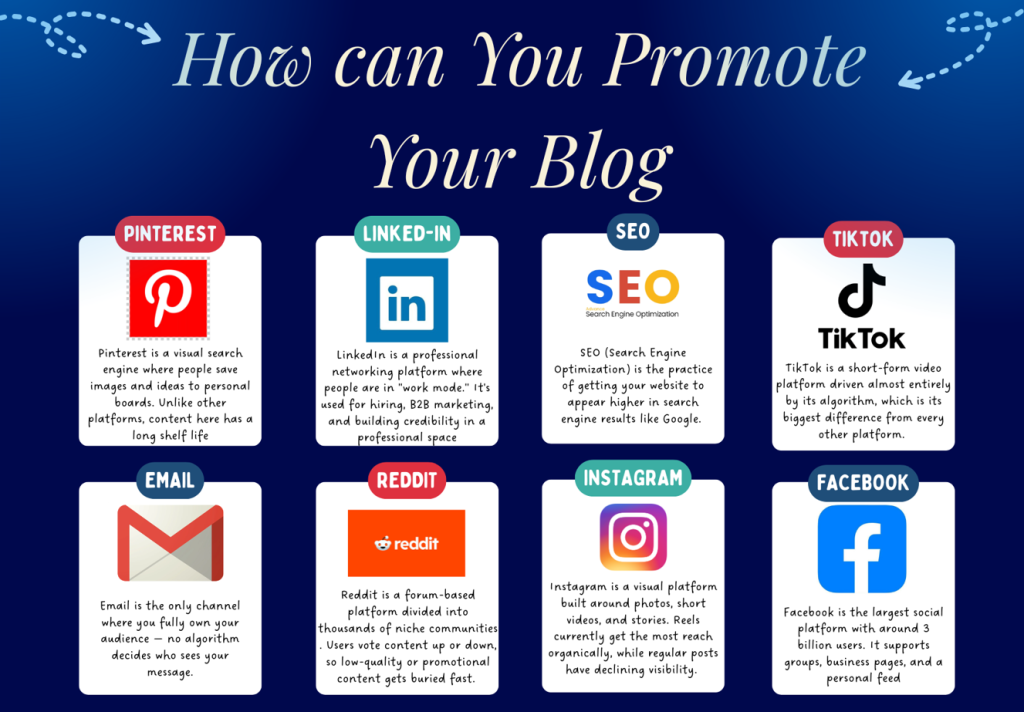
Step 6: Promote Your Content
After publishing and optimizing, you share your blog post across different channels:
- Social media (Facebook, Twitter, LinkedIn, Pinterest)
- Email newsletters
- Online communities and forums
- Guest posting on other blogs
Promotion drives traffic (visitors) to your blog.
Step 7: Engage With Your Readers
Readers may leave comments on your blog posts. You respond to those comments, answer questions, and build a community around your blog.
Engagement builds trust and loyalty, and readers keep coming back for more.
Step 8: Monetize Your Blog
Once your blog gets consistent traffic, you can make money from it through various methods. We will discuss monetization strategies in detail below.
How Do Blogs Make Money? 💰
Many people wonder how bloggers earn money. Here are the most common monetization methods:
a) Display Advertising
You place ads on your blog through networks like:
- Google AdSense (beginner-friendly)
- Mediavine (requires 50,000+ monthly sessions)
- AdThrive (requires 100,000+ monthly pageviews)
You earn money every time a visitor views or clicks an ad.
b) Affiliate Marketing
You recommend products or services in your blog posts using special affiliate links. When a reader buys through your link, you earn a commission.
Popular affiliate programs include:
- Amazon Associates
- ShareASale
- CJ Affiliate
- Impact
c) Sponsored Posts
Brands pay you to write a blog post about their product or service. The more traffic and authority your blog has, the higher you can charge.
d) Selling Digital Products
You create and sell your own:
- E-books
- Online courses
- Templates
- Printables
- Guides
e) Offering Services
Many bloggers use their blog to attract clients for services like:
- Freelance writing
- Consulting
- Coaching
- Web design
f) Email Marketing
You build an email list and sell products or promote affiliate offers directly to your subscribers.
Simple Example: How a Blog Works
Let’s walk through a real-life example to make everything crystal clear.
Imagine you run a food blog called “TastyBites.com”
Here is how it works:
- You set up your blog on WordPress with Bluehost hosting.
- You pick a clean food blog theme and customize it with your brand colors.
- You do keyword research and find that people search for “easy pasta recipes for beginners.”
- You write a detailed blog post titled “10 Easy Pasta Recipes for Beginners — Ready in 30 Minutes.”
- You optimize the post with SEO (keyword in title, headings, meta description, alt text on food images).
- You publish the post and share it on Pinterest and Instagram.
- Google crawls and indexes your post. After some time, it appears on page one for the keyword “easy pasta recipes for beginners.”
- Readers find your post on Google, read it, try the recipes, and leave comments.
- You earn money through display ads on the page and affiliate links to kitchen tools you recommend.
- Readers subscribe to your email list and you send them new recipes every week.
That is exactly how a blog works from start to finish!
Final Thoughts
Now you have a complete understanding of how a blog works. Let’s quickly recap the journey:
- You choose a platform and set up hosting
- You design your blog
- You create valuable content
- You optimize it for search engines
- You promote it across different channels
- You engage with your readers
- You monetize your blog over time
Blogging is not a get-rich-quick scheme. It requires patience, consistency and genuine effort. But the rewards are incredible and long term. A blog can help you share your knowledge, build a personal brand, connect with a global audience, and create a sustainable income stream.
Whether you want to start blog as a hobby, a side hustle, or a full-time career, the process remains the same. Start today, stay consistent, and keep learning.
Ready to Start Your Blogging Journey?
At insight press, we help you learn everything about blogging, digital marketing, and building your online presence. Explore our other guides to take your next step:
👉 [How to Start a Blog from Scratch]
👉[What is a Blog? Is Blogging Still Effective in 2026?]